

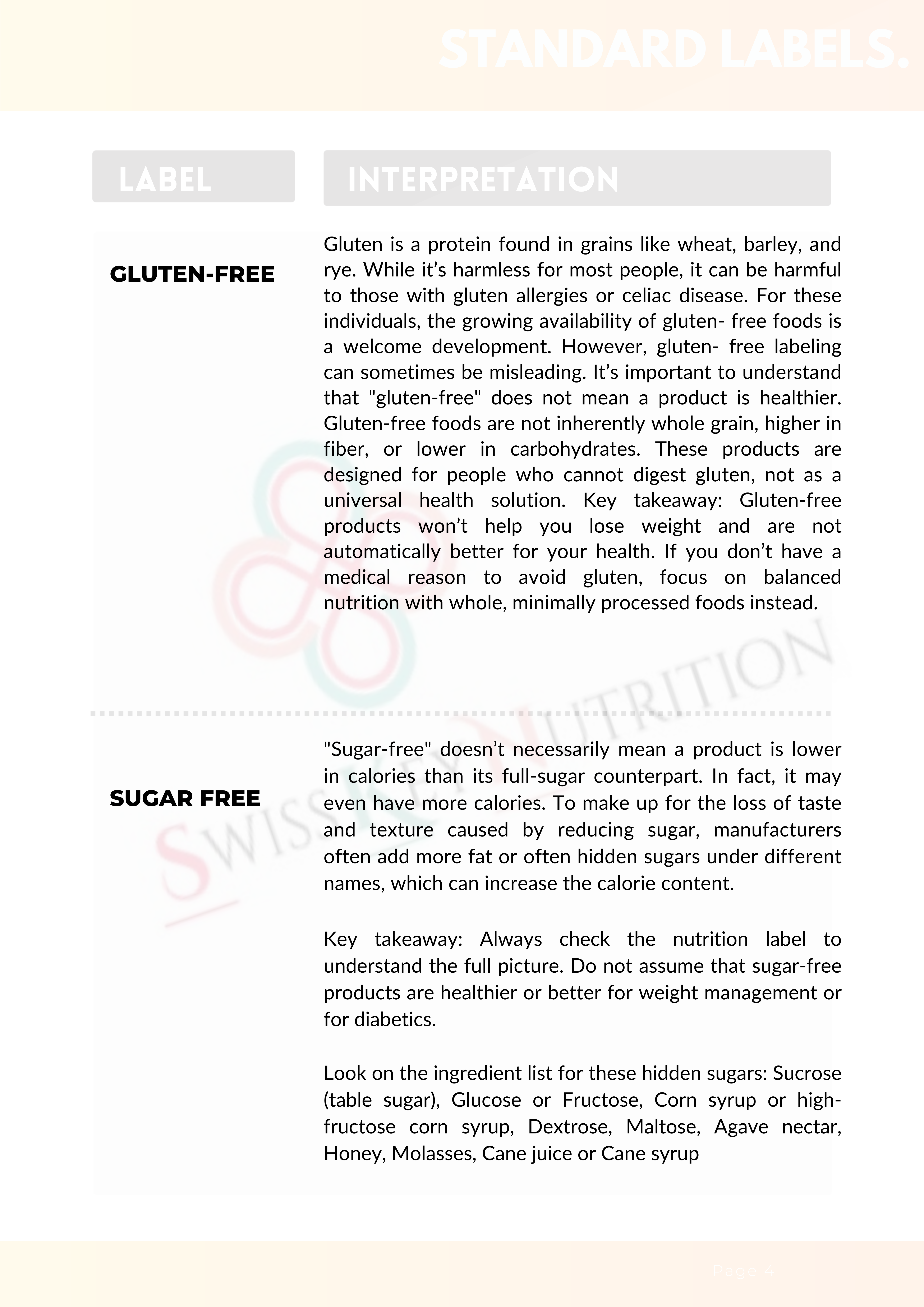
Reading food labels can be challenging, especially with the wide variety of terms used by manufacturers. It’s easy to feel confused or misled if you’re not familiar with the terminology. One important thing to remember is that many aspects of modern food production are driven by profit. This mindset has led to loopholes in labeling laws, allowing companies to bend the truth in ways that can mislead consumers. For example: Amino acid sports drinks or protein waters are often advertised as being “calorie-free” or “low in calories.” Let’s break this down. Each gram of protein contains 4 calories. If a protein water claims to have 20 grams of protein but only 30 calories, the math simply doesn’t add up. The reason? There’s a legal loophole that allows companies to exclude calories derived from amino acids in their nutritional labeling. This is just one of many examples where labeling can be misleading.
What does this mean for you?
It means you need to stay informed and understand what to look for on food labels. By learning the terminologies and common tricks used by manufacturers, you can make better, more informed choices for your health.